NEW YORK, Aug 3, (NYCDV) – For thousands of New York City’s taxi and app-based drivers, the rise of autonomous vehicles (AVs) has created an unsettling question: What happens to their livelihoods when cars no longer need human?
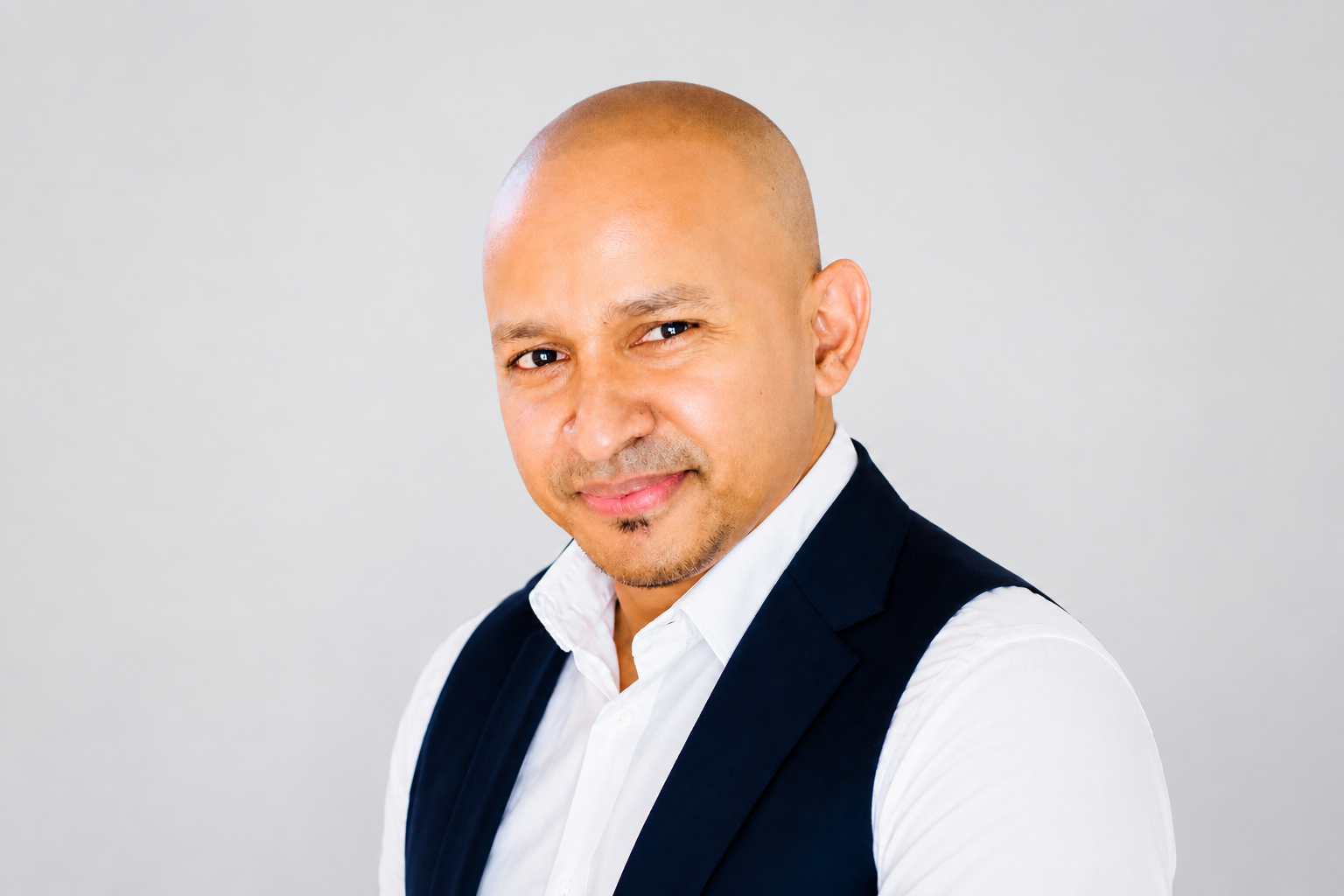
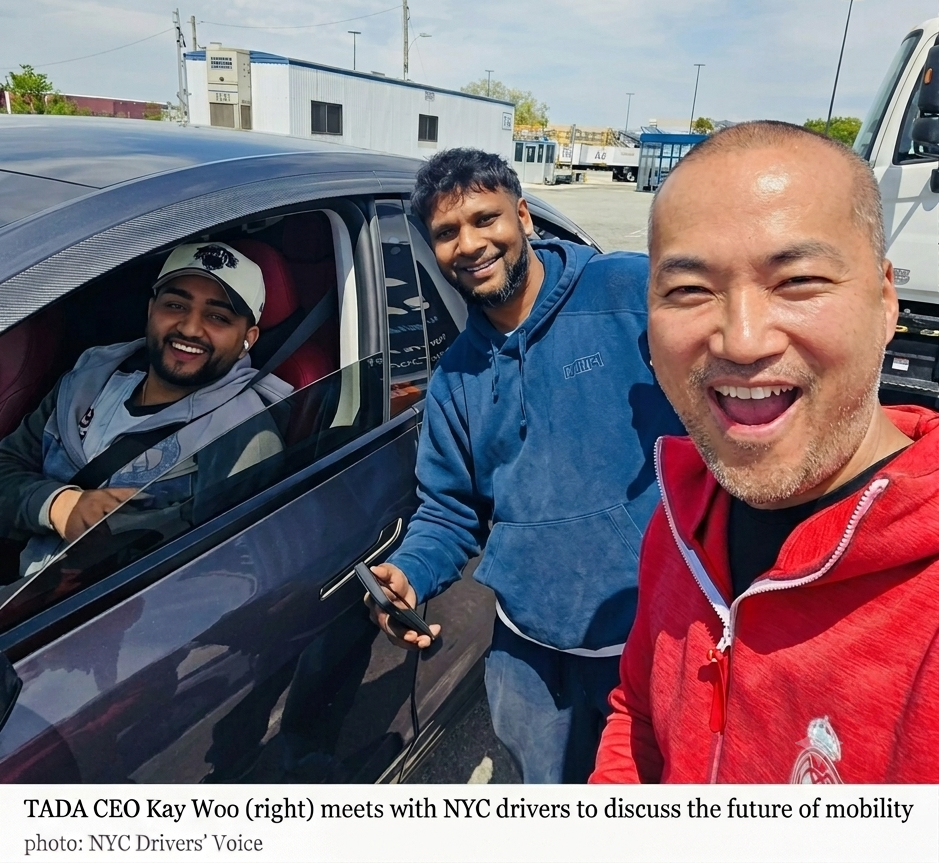
TADA CEO Kay Woo says autonomous vehicles are inevitable but argues that drivers do not have to become casualties of the technological shift. Through a blockchain-based ecosystem that records and rewards their trips, transactions, and contributions, drivers could build financial value towards partial owners of autonomous vehicles.
“Autonomous vehicles are inevitable. The real question is: Who is going to own them?… future does not have to be a choice between technological progress and human participation,” Kay Woo said during an exclusive interview with NYC Drivers’ Voice.
TADA, a Singapore-based mobility technology, is among a small group of emerging platforms challenging the ride-hailing market’s effective duopoly through a zero-commission model and direct face-to-face driver outreach. Its new app, Throo, aims to provide drivers with an alternative to the high commission structures long associated with Uber and Lyft.
Under the blockchain-based ownership model, Woo said, an autonomous vehicle could continue generating income for its driver-owner even when the drivers are resting or pursuing other opportunities. “Rather than simply replacing drivers, autonomous technology could become an asset they own, operate and profit from, offering a potential roadmap for a more inclusive future of mobility,” he added.
Woo, a Korean technology executive, envisions a future in which drivers are not displaced by automation but instead become active participants and potentially partial owners of the autonomous mobility ecosystem through blockchain technology.
The rapid growth of automobile vehicle companies underscores how quickly the industry is evolving. Waymo, the self-driving technology company owned by Alphabet Inc., Google’s parent company, operates commercial robotaxi services in 10 U.S cities, including Miami and Dallas. Besides, trillionaire Elon Musk’s Tesla Robotaxi and Amazon’s Zoox driverless cars are also competing for a position in the driverless mobility market.
The global autonomous vehicle industry is estimated to be worth approximately $126 billion, reflecting the substantial investment flowing into autonomous mobility and reinforcing Woo’s view that the future is arriving faster than many anticipated.
Despite this momentum, many people remain wary of self-driving cars following reports of traffic violations and more serious crashes. New York Governor Kathy Hochul recently withdrew a proposal that would have permitted commercial robotaxi services outside New York City.
At the same time, autonomous technology continues to advance. Waymo recently updated its software to prevent its robotaxi from entering flooded roads, while Amazon-owned Zoox just won U.S. approval to deploy 25,000 vehicles annually for two years.
According to TADA CEO Kay Woo, today’s drivers create enormous value through every trip they complete, every passenger they transport and every contribution they make to a ride-hailing platform. “Yet much of that value, including the transaction history and data generated through their work, remains under the control of the platforms rather than the drivers themselves.”
Woo believes blockchain technology could reshape the relationship between drivers and mobility platforms by allowing drivers to securely own, manage and control their data. Under his vision, drivers’ trips, transitions and contributions would be permanently recorded on a blockchain network, creating a trusted digital history.
As of now those data saved in Uber and Lyft – you don’t have access to it- Woo said adding, those verified records could become valuable financial assets, helping drivers establish credibility, secure financing for autonomous vehicles, and transition from vehicle operators to potential vehicle owners.
Woo believes this approach could fundamentally reshape the relationship between drivers and mobility platforms instead of simply providing labor, drivers would become long-term stakeholders in the ecosystem they help build every day. “Beyond vehicle ownership, blockchain gives drivers something equally important – ownership of their own data.” Woo believes.
As artificial intelligence becomes increasingly integrated into transportation, he argues that personal information and verified transaction histories will become valuable digital assets rather than allowing those records to remain exclusively under the control of ride-hailing platforms.
Woo’s vision extends beyond ride-hailing. With 52,000 drivers already connected to TADA’s network, he believes that the platform could expand through strategic partnerships with delivery logistics and other mobility services, creating new opportunities.
“What we can do say Hey DoorDash I have 52,000 drivers here in New York don’t you connect to our infrastructure to your service?…All of a sudden, the Uber competitor is doing delivery for delivery and ridesharing together with us. Why Not?” he observed.
The Korean technology executive, 44, also foresees future integration with AI-powered digital agents capable of automatically connecting customers with transportation services across multiple platforms.
Drivers interviewed by NYC Drivers’ Voice expressed caution optimism about the proposal. While acknowledging that significant technological, financial and regulatory challenges remain, they said concept opens an important conversation about ensuring drivers to share in the benefits of autonomous mobility rather than being left behind.
Md. Azizul Haque, a veteran New York City yellow cab driver, said autonomous vehicles are inevitable, even if many drivers oppose them. He supports introducing AVs on a limited scale to evaluate their feasibility, while carefully addressing pricing, financing, maintenance and other operational issues. He also recommended incorporating drivers’ experience into the planning process.
Autonomous vehicles would face significant challenges navigating New York City’s complex streets, said Nadirul Topu, a Lyft driver. AVs could eventually replace some human drivers, he said the transition would be more acceptable if drivers had an opportunity to own autonomous vehicles.
Shaheen Hossain, an Uber driver, believes human drivers remain better equipped than autonomous vehicles to make split-second decisions in unpredictable road conditions. He argued that AVs cannot yet match human judgment and adaptability in real-world driving situations.
Hossain added that while humans created artificial intelligence and autonomous vehicle technology, people will ultimately determine how those innovations are used. He believes those who develop new skills and adapt to technological change will be better positioned to succeed as autonomous vehicles enter the New York City market.
Commenting on TADA’s proposal to offer drivers partial ownership of autonomous vehicles through a blockchain-based ecosystem, Ralph Bisceglia, President and CEO of American Transit Insurance Company (ATIC), one of the largest commercial automobile insurance carriers in New York State, said the rapid emergence of artificial intelligence and autonomous robotic technologies is creating fierce competition for data and personal information.
As AI-driven systems become increasingly integrated into everyday life, questions surrounding data ownership, privacy and individual control will become just as important as the technologies themselves, said Bisceglia, whose company is developing a business model that would give drivers a voice while enabling them to benefit from autonomous vehicle service units.
ATIC chief believes blockchain technology can offer a powerful solution by enabling individuals to securely own, manage and control their digital information. “When applied within a blockchain-based marketplace, such as the ‘Excelsior Project’, the technology could empower participants by giving them a meaningful stake in the ecosystem and a stronger voice in determining how AI and autonomous technologies affect their livelihoods and daily lives.
Rather than allowing machine AI to simply displace people, Bisceglia envisions a future in which technological advancement and human IA (intelligence awareness) evolve together—with transparency, shared ownership and individual empowerment at the core.
Whether blockchain-based ownership becomes reality remains uncertain. But one thing is clear: as autonomous vehicles and artificial intelligence reshape transportation, the debate is no longer just about who will drive the future – it is about who will own it, who will benefit it, and whether today’s drivers will remain participants in the mobility economy they helped build.
Kamal Ahmed holds a Master’s Degree in Economics. He has more than a decade of experience in New York City’s for-hire vehicle industry and has worked with the American Transit Insurance Company (ATIC). He currently serves as an industry consultant. He is the Chief Editor of NYC Drivers’ Voice. Previously, he worked for leading daily newspapers in Bangladesh and the country’s national news agency and also contributed as a stringer to international news agencies, including Reuters, AFP, Xinhua, and PTI.
12 Responses
Great article. A kind of relief for taxi and app-based drivers.
Thank yo for your valuable comment
Interesting article. Im curious to see what’s going to happen.
Thank you for your valuable comment
A peek into the future
Thank you for your valuable comment
Appreciate your hard work and dedication to the industry Mr. Kamal. Your write up always reflect the stories of hard working taxi and app-based drivers. Keep up the amazing work.
Thank you for your valuable comment
Partial ownership means partial income.. waiting to know more details.. end of the day AI will control everything..finance matters.. autonomous vehicles against 200000 human driven vehicles.. doesn’t add up.. should testing it to see how it goes..
Thank you for your valuable comment
Thousands of drivers will be jobless
Thank you for your valuable comment