

NEW YORK, Sept. 13 (NYCDV) — Transportation regulators, industry leaders, insurers, policymakers, drivers and advocates from around the world are expected to gather in Las Vegas as the International Association of Transportation Regulators’ four-day 39th Annual Conference kicks off tomorrow.
The conference, themed “AV City: Autonomous Mobility,” runs from September 14–17 at the Vdara Hotel in Las Vegas. It will focus on how robotaxis, autonomous vehicles, artificial intelligence, and connected transportation systems are reshaping taxis, for-hire vehicles, public transit, and other mobility services.
In announcing the conference, IATR said Las Vegas will offer participants an opportunity to see how autonomous mobility is moving “from concept to operational reality.” The organization emphasized that strong public-private collaboration, accountability, and updated regulatory frameworks will be essential to protect passengers while supporting responsible innovation.
Ralph Bisceglia, President and CEO of American Transit Insurance Company (ATIC), NYC’s leading insurer of its for-hire transportation fleet, said marketplace adaptability will be vital as transportation regulators, financial companies technology providers, drivers and the public confront the rapid changes ahead.
“Adaptability while maintaining focus is key for consensus, especially for our independent contractor drivers.”, said Mr. Ralph, whose company is developing a business model that would help give drivers a voice while enabling AV companies to better align their interests with those of the drivers.
He further added, “The proper alignment of interests and goals can grow the marketplace to enable everyone to benefit from autonomous vehicle service units.”
IATR is a nonprofit organization of government transportation officials. Its members and stakeholders address regulatory issues involving taxicabs, black cars, limousines, ride-hailing companies, paratransit, micro-mobility, autonomous vehicles, and other emerging transportation services.
A central focus of the 2026 conference will be the challenge of ensuring that technology advances with public safety, accountability and fairness. The preliminary program includes discussions on AV safety standards, data reporting, insurance requirements, liability, accessibility, affordability, sustainability and public trust.
One session will examine the taxi, for-hire vehicle and bus insurance crisis, including insurance reform, fraud reduction, tort reform and the role of advanced driver-assistance systems. Speakers are also expected to discuss how insurance and risk frameworks may change as autonomous vehicles move from pilot programs toward wider commercial use.
For professional drivers, one of the most important sessions will focus on labor displacement and workforce development. The discussion is expected to address concerns that autonomous vehicles could affect taxi, FHV, bus and delivery jobs, while also considering retraining, new employment opportunities and policies designed to support workers during the transition.
The agenda will additionally explore partnerships among robotaxi companies, ride-hailing platforms, taxis, public transit agencies and airports. Other panels will look at accessible transportation, first- and last-mile transit connections, sustainability, congestion and regulatory planning for major events such as the FIFA World Cup, Super Bowl and Olympics.
Las Vegas was selected in part because Nevada was the first U.S. state to authorize autonomous-vehicle testing and has become a major center for robotaxi deployment and smart-transportation investment.
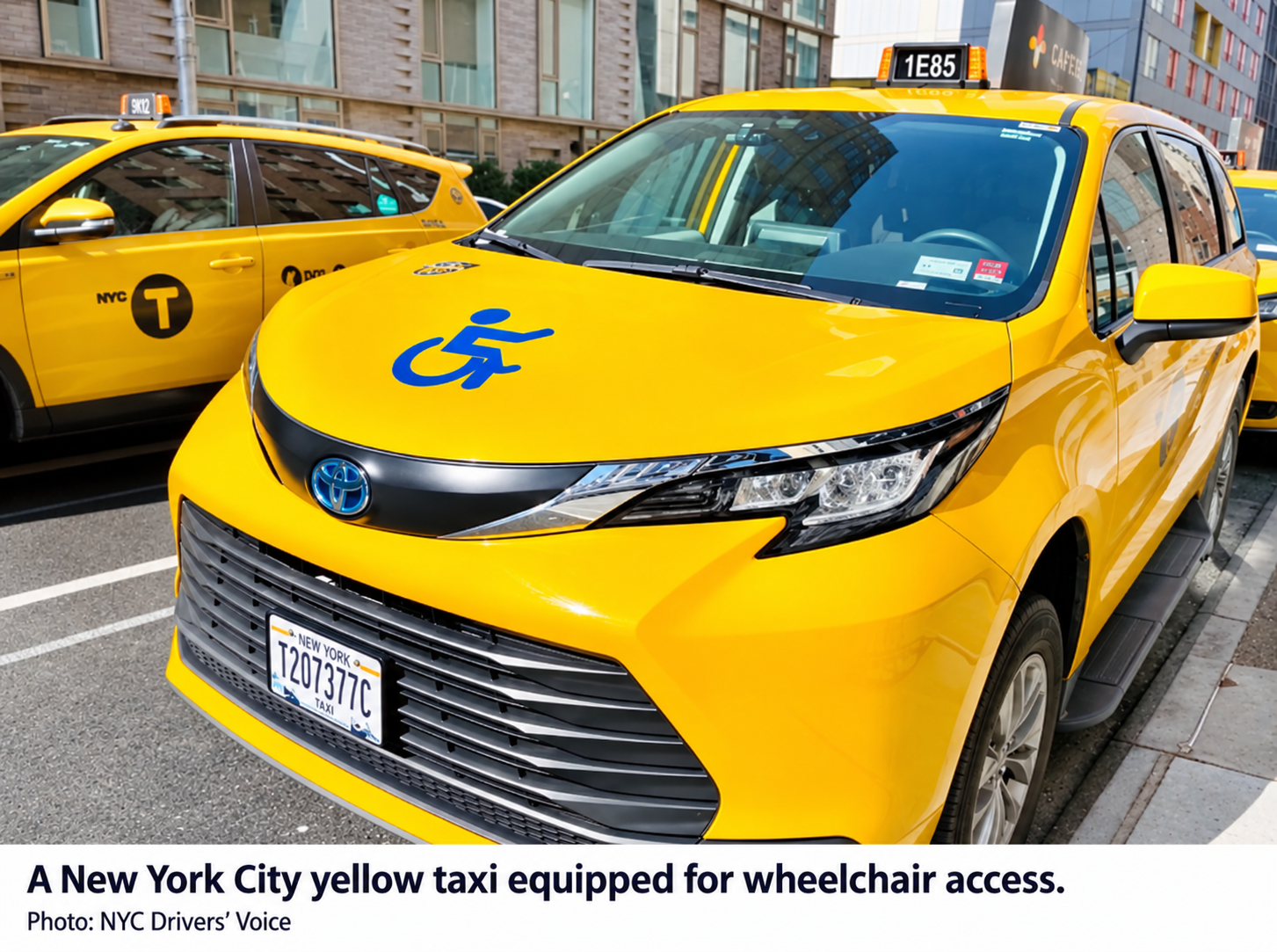
For New York City’s taxi and for-hire vehicle community, the conference comes at a crucial time. As autonomous transportation moves closer to mainstream operation, the industry must address serious questions about driver livelihoods, passenger protection, insurance affordability, wheelchair accessibility, data transparency, and who will be responsible when an AV crash occurs.
The conference is expected to provide a platform for regulators and industry stakeholders to exchange ideas on how autonomous mobility can be introduced responsibly—without overlooking the workers and passengers who depend on the transportation system every day.
Kamal Ahmed holds a master’s degree in Economics and an associate degree in Health Sciences in the United States. He has more than a decade of experience in the for-hire vehicle (FHV) industry and has worked with the American Transit Insurance Company (ATIC), currently serving as a consultant to both sectors. He is the Chief Editor of NYC Drivers’ Voice. Previously, he worked for daily newspapers and the national news agency of Bangladesh. He also served as a stringer for Reuters, Agence France-Presse (AFP), Press Trust of India (PTI), and the Xinhua News Agency.
3 Responses
Auto Industry is reshaping faster than expected. Drivers leverage should be the number one priority in the IATR Conference.
Appreciate your comments.
Helpful articles that inform and inspire.