
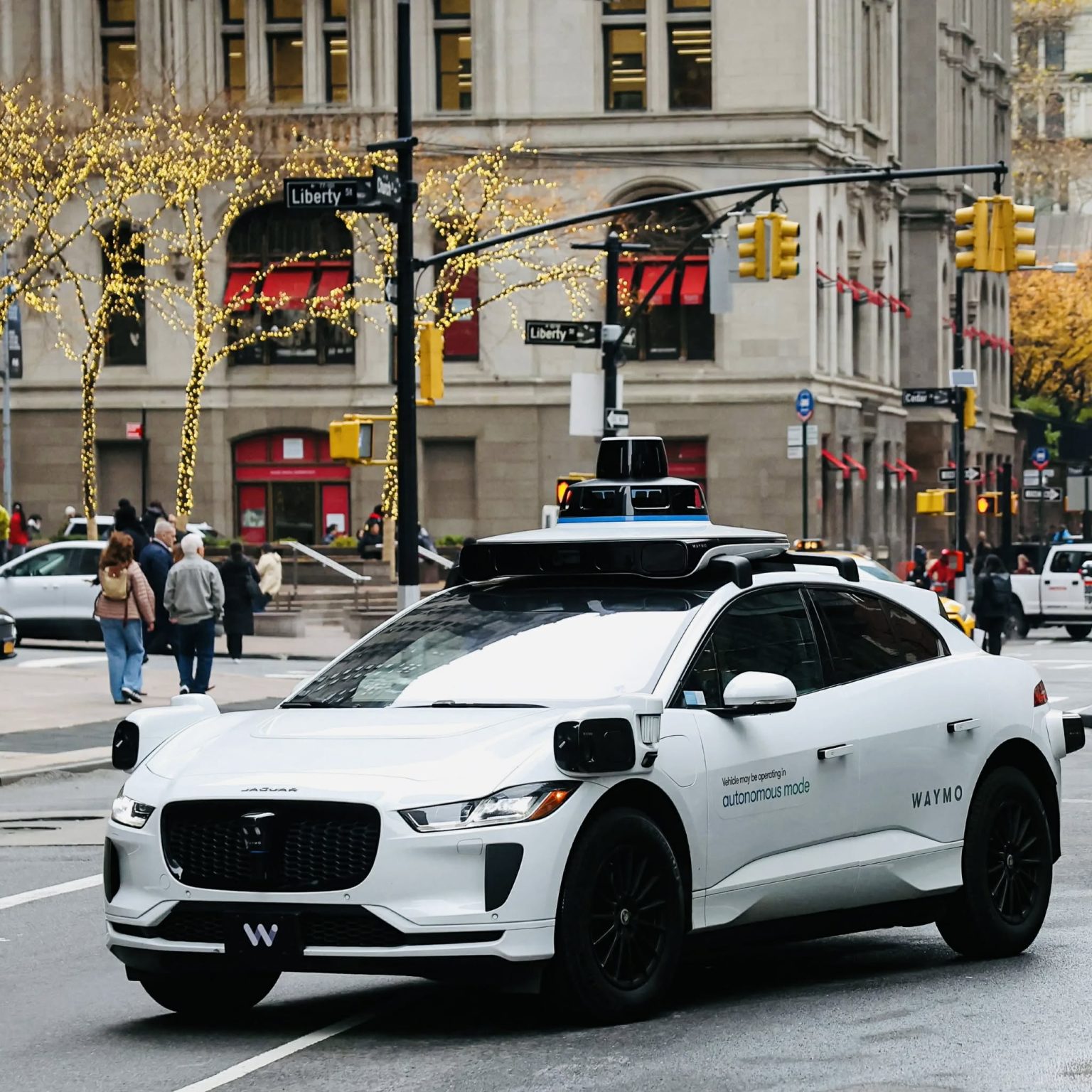
A new transportation study is raising fresh questions about the safety of autonomous robotaxis while providing renewed support for New York City’s taxi and for-hire vehicle (FHV) drivers, many of whom have long feared that self-driving technology could replace professional drivers.
The report, produced by researchers at Hunter College’s Sam Schwartz Transportation Research Program and Open Plans, found that Waymo’s autonomous vehicles were involved in serious injury or fatal crashes at a higher rate per mile driven than New York City’s professional for-hire vehicle fleet.
Waymo, a subsidiary of Google’s parent company Alphabet Inc., has attracted more than $16 billion in investment and has rapidly expanded robotaxi operations across several U.S. cities.
The new findings challenge the company’s long-standing claims that its autonomous technology is significantly safer than human drivers, as the researchers compared crash data involving Waymo vehicles operating nationwide with New York City’s Uber, Lyft, taxi, and other for-hire vehicles since 2020.
While Waymo recorded only three crashes resulting in death or serious injury, researchers said the company’s fleet has logged far fewer miles than New York City’s approximately 120,000 professional for-hire vehicles, making the rate of serious crashes more significant when measured per mile traveled.
The report also questioned Waymo’s widely publicized claim that its autonomous vehicles experience 94% fewer crashes than human drivers. Researchers argued that a more appropriate comparison is with professional taxi and FHV drivers, who are substantially safer than the average motorist due to their training and experience.
Waymo disputed the study’s methodology, saying meaningful safety comparisons should be based on consistent datasets and cautioning against drawing conclusions from different operating environments.
The company also pointed to broader national data showing its vehicles were involved in approximately 67% fewer injury-causing crashes per million miles driven, while acknowledging that its New York testing remains limited.
Researchers urged lawmakers to move cautiously before approving broader deployment of robotaxis, arguing that more real-world evidence is needed before autonomous vehicles can be considered a safer alternative to professional drivers.
For New York City’s taxi and app-based drivers, the findings provide renewed support for the view that experienced human drivers continue to play a critical role in delivering safe, reliable transportation while the long-term performance of autonomous vehicles remains under close scrutiny.
The study comes as New York continues to debate the future of autonomous vehicles. Last year, the city permitted Waymo to conduct a limited pilot program using eight vehicles with safety drivers behind the wheel and no passengers.
On Feb 19, 2026, New York City Governor Kathy Hochul withdrew support for legislation that would have expanded autonomous vehicle operations outside the Big Apple.
The decision underscored the cautious approach policymakers continue to take as the debate over the safety, regulation, and future of autonomous vehicles intensifies.
Commenting on the report, the New York Taxi Workers Alliance (NYTWA), a strong union reportedly comprised of 28,000 of the city’s taxicab and for-hire vehicle (FHV) drivers, said Waymo has tried to sell the public on driverless cars being safer than the average driver, but it turns out that there is nothing average about TLC drivers.