

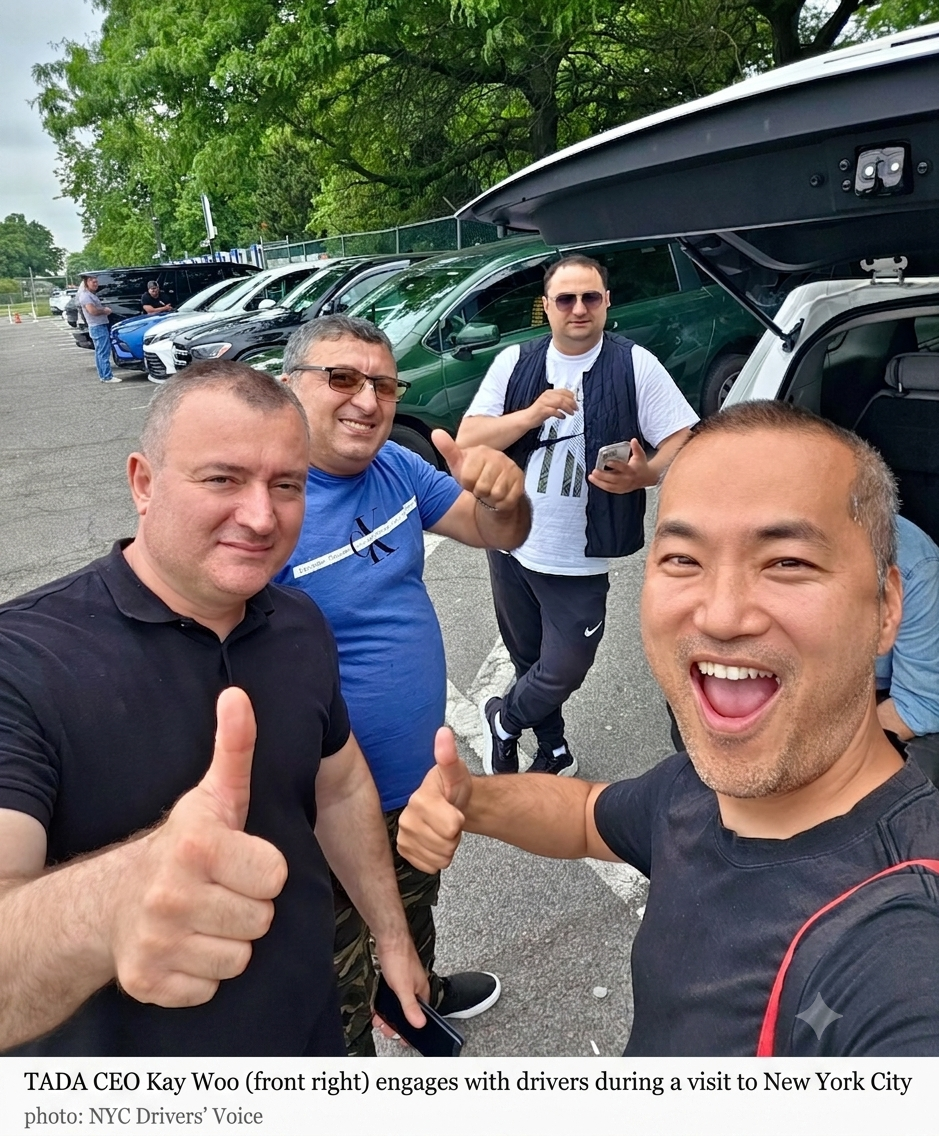
NEW YORK, July 27 (NYCDV) – TADA, the Singapore-based mobility company behind the zero-commission ride-hailing platform Throo, has surpassed 52,000 drivers’ sign-ups in just five months, marking a significant milestone as it seeks to challenge the traditional ride-hailing model through innovation, technology and driver-first approach.
“More than 52,000 drivers have already signed up. Our mission is to deliver the best solutions for drivers. We’re committed to helping improve their livelihood through innovation and fairer economics,” Kay Woo, Chief Executive Officer (CEO) of TADA, told NYC Drivers’ Voice in an exclusive interview.
The Korean tech executive said his vision is to make drivers true stakeholders by treating them as the company’s primary customers and improving their earnings and long-term financial well-being. He said this balanced driver-rider-company model, which he described as a “triangle relationship,” will ultimately benefit both drivers and passengers.
During the interview, Kay outlined the company’s long-term growth strategy for the U.S. market, including expansion into Washington, D.C, Philadelphia, Massachusetts, the Columbia University-NYU House Cup Challenge as an innovative marketing strategy, the rollout of AI- powered ride booking, and the future integration of blockchain technology and autonomous vehicles (AVs) to create a more sustainable mobility ecosystem.
Founded in Singapore in 2018, TADA operates a zero-commission ride-hailing platform across several Asian markets and has completed more than 150 million trips worldwide. It is a part of MVL, a blockchain-based mobility ecosystem integrating ride-hailing, electric vehicles digital infrastructure.
Uber and Lyft, the city’s two dominant transportation network companies (TNCs), account for about 80 percent of all taxi and for-hire vehicle trips, with Uber alone representing roughly 70 percent of the market, according to data from New York City Taxi and Limousine Commission (TLC).
More than 200,000 drivers hold TLC licenses in New York City, while the city records show nearly one million taxi and for-hire vehicle trips each day. With a population of approximately 8.5 million, New York represents one of the world’s largest and most competitive ride-hailing markets, according to available city data.
Addressing widespread complaints about declining driver earnings, TADA CEO Kay Woo said Throo’s zero-commission model offers drivers a meaningful alternative, though he acknowledged the platform is still in its early stages in New York.
“We’re still a very small player in New York. I’m not asking drivers to leave Uber today because they still need to earn a living. What I can say is that they now have another option—one that will take time to grow.”
Woo encouraged drivers to keep the Throo app online while continuing to work on other platforms so they can monitor demand as the network expands. He also urged drivers to speak up when they feel they are being treated unfairly. “Drivers need to raise their voices collectively. With everyone’s support, I’m confident Throo will continue to grow.”
To illustrate the current imbalance in the industry, Woo recalled taking a ride from Manhattan to JFK Airport during a market research visit to New York last year. “I was charged about $170, while the driver received only $70 or $80. That’s the reality.” Woo said Throo’s long-term vision is to build a driver-first platform where drivers are treated as the company’s primary customers.
“Our vision is for drivers to become owners of the network. By definition, drivers are our customers, while riders are our secondary customers. If we help drivers earn more and prepare for the future, riders will also benefit. It’s a balanced, triangle relationship.”
Asked about the company’s promotional strategy, TADA founder Kay Woo said the company has launched the “Columbia University vs. New York University (NYU) Rideshare Challenge,” a technology-driven campaign that will later expand to other universities and corporate partners.
Kay Woo also outlined the company’s long-term blockchain strategy, saying the technology will underpin a driver-centric ecosystem in which drivers become key stakeholders rather than merely platform users. He said blockchain will create a transparent and immutable record of drivers’ transactions and contributions, enabling them to build verifiable credit histories while ensuring data cannot be altered or deleted.
On autonomous vehicles (AVs), the tech executive said their arrival is inevitable, but the real question is who will own them. He envisions a blockchain-based ecosystem in which drivers become partial owners, earning permanent, tamper-proof digital records of their contributions and transactions. Those assets could eventually help drivers finance autonomous vehicles that can operate across multiple ride-hailing platforms.
“That is the near future I am envisioning,” Kay said.
Highlighting TADA’s AI roadmap, Kay said the company is developing an AI-powered ride-booking agent that will allow users to request rides without opening the app. “You don’t need to open the application to book a ride,” he said.
Speaking with NYC Drivers’ Voice, Bhairavi Desai, executive director of New York Taxi Workers Alliance (NYTWA), an organization representing 28,000 taxi and for-hire vehicle drivers, said the alliance would closely monitor how the company operates and treats drivers as it moves forward.
“At this stage, the company has provided little information about how it plans to attract a substantial passenger base, and we remain concerned about these issues,” Desai added.
To gauge industry reaction, NYC Drivers’ Voice Chief Editor Kamal Ahmed spoke with a cross-section of New York City’s taxi and app-based drivers about the launch of Throo. While most welcomed the zero-commission ride-hailing platform as a promising alternative to Uber and Lyft, others remained skeptical about whether it could attract enough passengers to compete effectively in the city’s highly competitive market.
Wilfred Ebong, a Black Car driver from Nigeria, said he ended his workday after reviewing the earnings breakdown of a trip he completed last week, in which the passenger paid $116.39 but he received only $43.97 from the fare. “It feels like you’ve been robbed, but there’s nothing you can do,” he lamented.
Welcoming Throo’s launch, veteran taxi driver Md. Azizul Haque stressed the need to protect drivers through strong insurance coverage and job security. “Safeguarding drivers’ livelihoods should remain a top priority as the platform expands.”
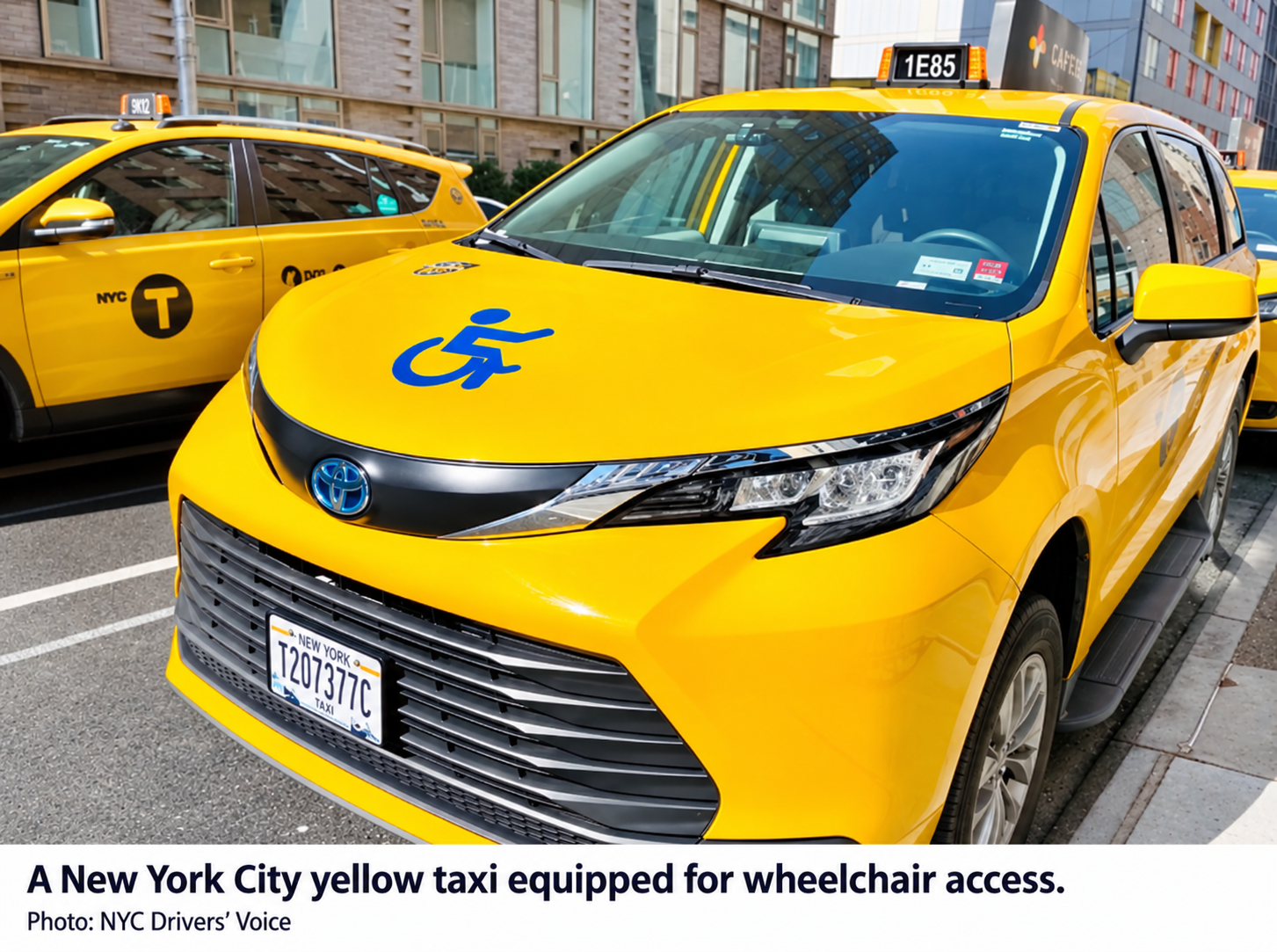
Haque, who was deactivated by Uber, welcomed Throo’s zero-commission model but questioned whether the company could guarantee drivers would not face arbitrary deactivations over minor passenger complaints. He also advocated integrating traditional yellow taxis (medallions) into the platform.
Echoing those concerns, MD Moinul Hossain said Throo must focus on attracting more riders. “I can’t keep the Throo app open for hours when there are no ride requests,” he said.
Another driver, Nadirul Topu, also deactivated by Uber, said Throo would need extensive advertising and promotional campaigns to compete with the industry’s dominant platforms. “I personally want Throo to grow to help break Uber’s dominance,” he said.
Shaheen Hossain, an app-based driver, said the biggest challenge is attracting passengers rather than recruiting drivers. “I kept the Throo app online for seven straight days without receiving a single trip. Many drivers are ready to switch from Uber and Lyft—but where are the rides?”
Uber, however, said it welcomes competition from ride-hailing platforms such as Throo, while criticizing New York City’s decision to allow ‘Empower’ to operate.
Uber spokesman Josh Gold said the company was concerned that the government continued to allow what it described as an illegal operator to evade regulatory requirements and taxes.
Kamal Ahmed holds a Master’s Degree in Economics. He has more than a decade of experience in New York City’s for-hire vehicle industry and has worked with the American Transit Insurance Company (ATIC). He currently serves as an industry consultant. He is the Chief Editor of NYC Drivers’ Voice. Previously, he worked for leading daily newspapers in Bangladesh and the country’s national news agency and also contributed as a stringer to international news agencies, including Reuters, AFP, Xinhua, and PTI.

19 Responses
Uber and Lyft dominated New York City’s ride-hailing market for more than a decade. TADA believes its zero-commission, driver-first model can reshape the industry, but its success will ultimately depend on one critical factor: attracting riders while improving drivers’ livelihoods.
Very good.. hope for the best
Thank you for your valuable comment
Competition is always good for the industry, but the real measure of success is how much both drivers and customers benefit. A zero-commission model is certainly worth watching, but attracting riders, maintaining reliable service, offering competitive fares, and ensuring drivers can earn a sustainable income will be key. Ultimately, the industry’s long-term success depends on creating a fair system that delivers value to customers while putting drivers’ livelihoods at the center.
Thank you for your valuable comment
Good news
Congratulations to the TADA team! Wishing you continued success as you innovate with AI and autonomous technology.
Thank you for your valuable comment
It’s an informative news. Thanks for letting us know informations about this new ride share app. I wish they will think about NYC TLC drivers. Wish them good luck. Thanks everyone who they think about drivers right and life.
Thank you for your valuable comment
As a rideshare driver, I personally feel that Tada has not yet taken any significant steps to raise passenger awareness; I see no initiatives to encourage riders, nor have I come across any advertisements. Throughout the time I have kept the Tada app active, I haven’t received a single call—let alone a missed call. If they intend to run a business with 43,000 to 50,000 drivers, my question is: where are the passengers? I sincerely want Tada to emerge as a formidable competitor to Uber and Lyft and shake their foundations; perhaps then, Uber might stop behaving like the East India Company, and the TLC authorities might cease their sycophancy toward Uber. Tada needs to focus heavily on advertising to passengers now. If necessary, they could equip every driver’s vehicle with a tablet—mounted like an octopus on the back of the front passenger seat—featuring cartoons and games alongside a Tada rider QR code, allowing Lyft or Uber passengers to easily download the Tada rider app.
Thank you for your valuable comments.
Interesting article and well written.
Thank you for your valuable comment
Very good article. Impactful one. Can’t wait for the next piece.
Thank you for your valuable comment
Good. Keep it up.
Thank you for your valuable comment
wow, great work but Dada need to More advertising to people know there is another riide sharing app
Thank You for your valuable comment