
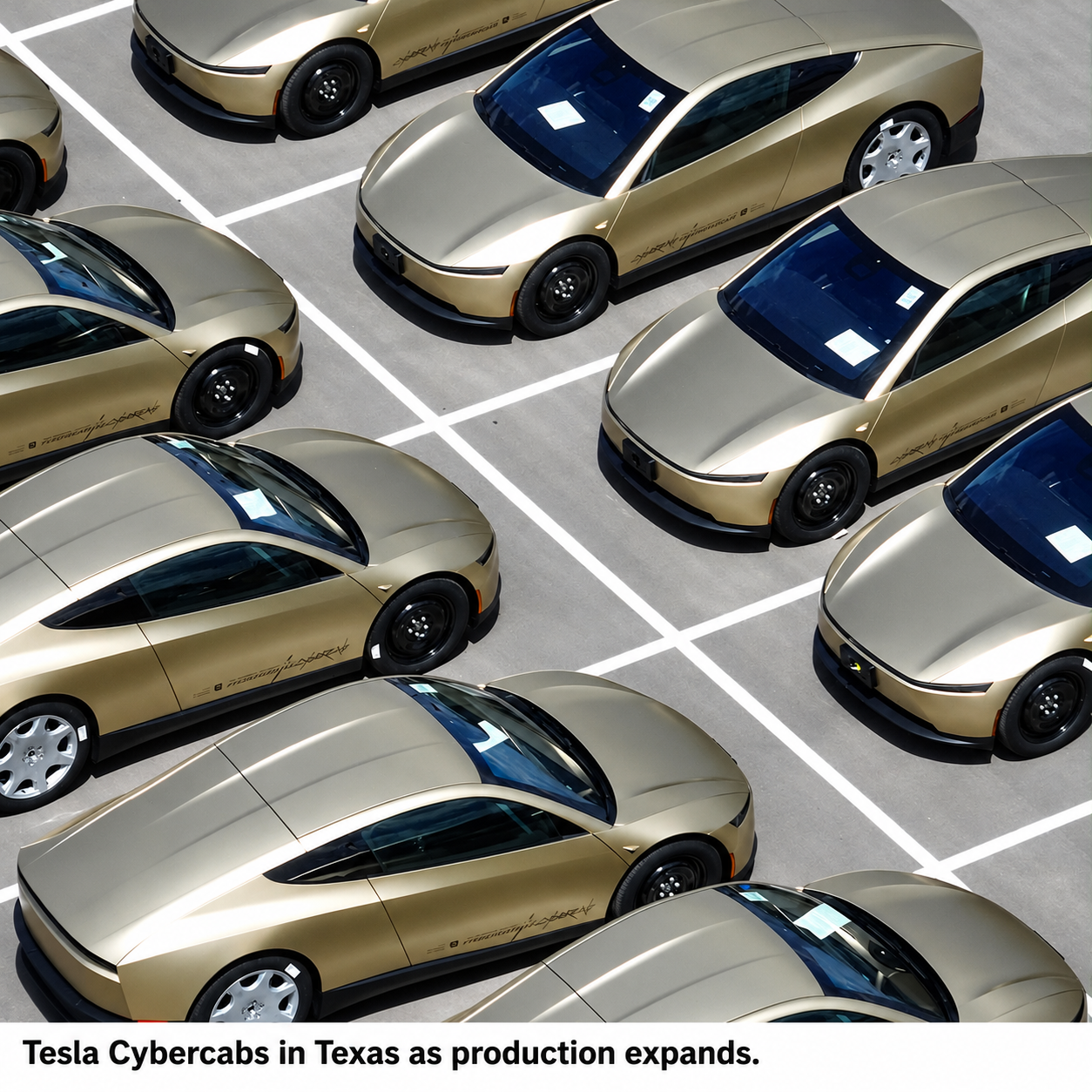
NEW YORK, Nov. 6 (NYCDV): Tesla CEO Elon Musk today said the company plans to wind down Cybertruck production at its Texas factory around the middle of 2027 to make room for increased Cybercab production, renewing questions about Tesla’s robotaxi ambitions and what the wider operation of autonomous vehicles could mean for New York City’s taxi and for-hire drivers.
“Tesla will be winding down production of the Cybertruck at Gigafactory Texas around the middle of next year to make room for increased Cybercab production,” Musk wrote in a post on X.
Tesla said Cybercab production began in April 2026. The company began offering robotaxi rides using Cybercabs in Austin on Sept. 3. Those developments show the service is expanding in Texas, but they do not establish when or whether Cybercab service will be available in New York City.
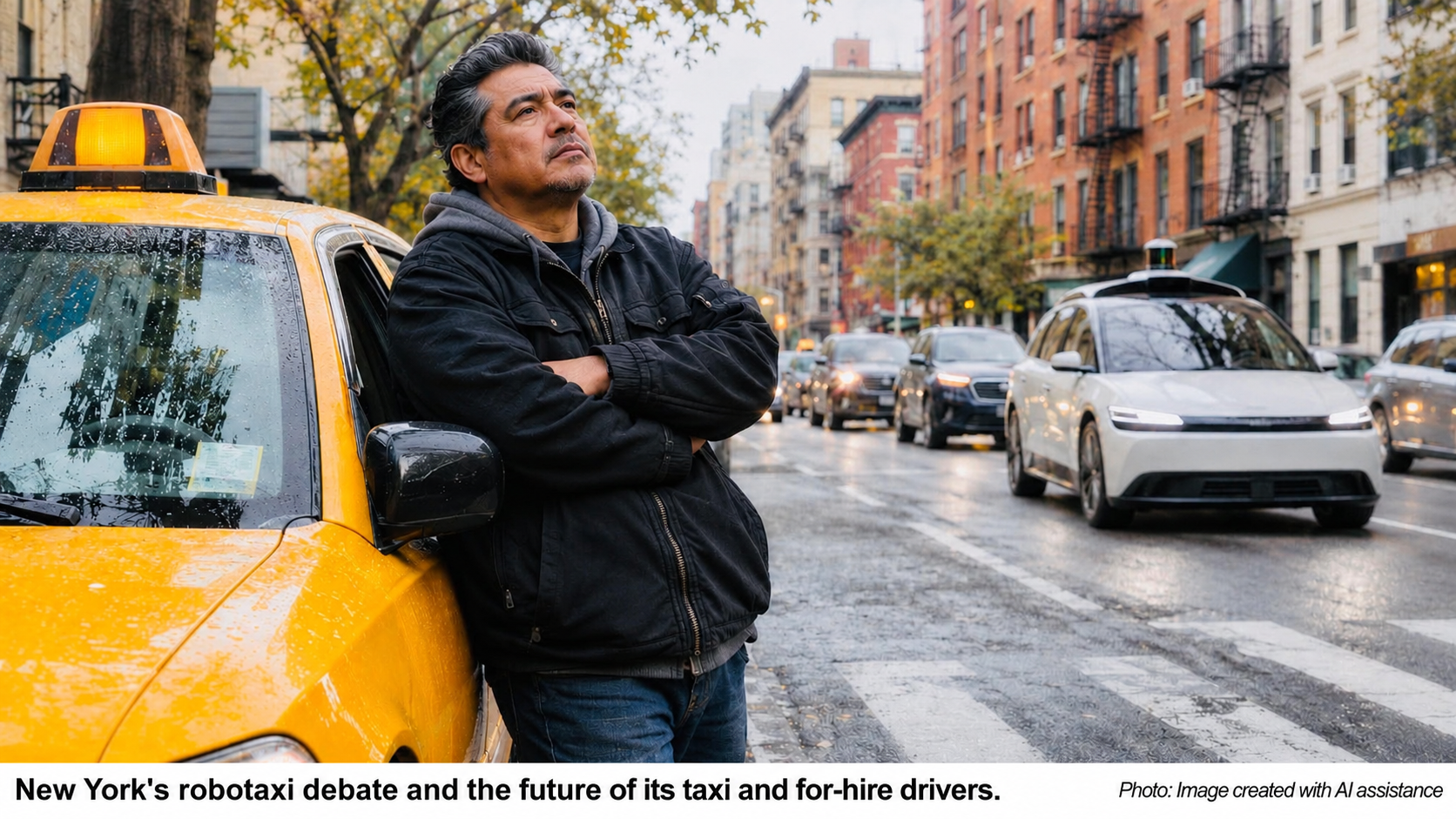
For NYC drivers, the announcement raises a practical question: how would the growth of driverless ride-hailing affect their jobs and income? Drivers interviewed by NYC Drivers’ Voice described different concerns and possibilities, from job displacement to vehicle ownership.
Md. Azizul Haque, a yellow-cab driver and member of the New York Taxi Workers Alliance, said he believes New York is not ready for driverless vehicles.
“New York is not ready for driverless vehicles,” Azizul said.
Bidyut Majumder, an Uber driver who also works for the Fire Department of New York, said he believes Cybercabs will hurt city drivers. He also said drivers could benefit if autonomous vehicles were operated through partnerships that gave drivers an ownership stake.
“Drivers would be able to make money staying home or doing other jobs when their AVs are on the road,” Majumder said.
Shaheen Hossain, a longtime app-based driver, criticized what he described as corporations profiting from drivers’ work. He said drivers need a strong trade union to bargain collectively and protect their interests.
Hossain also argued that independent-contractor status leaves drivers with limited protections; that is his view of the issue, rather than a description of the full legal rights available to drivers.
Bhairavi Desai, the Executive Director of the New York Taxi Workers Alliance (NYTWA), has been actively campaigning against the corporate push for autonomous vehicles (AVs) and “robotaxis” in New York City. Her stance centers on protecting the livelihoods, job security, and operational rights of the city’s 28,000+ taxi and rideshare drivers.
Desai has strongly condemned the entry of major autonomous vehicle companies into the NYC market, explicitly naming tech giants like Waymo.
In her recent testimonies before the city, she argued that drivers are being treated as “disposable” by regulatory bodies and multi-trillion-dollar corporations.
She frames the rise of driverless AI robotaxis as an existential threat to workers who are already struggling under an intense cost-of-living and affordability.
New York City currently has a permit program for autonomous-vehicle testing.
State law requires a test-vehicle operator to be present and ready to take control while the autonomous technology is operating.
A city testing permit covers testing; it should not be described as permission to launch driverless taxi service.
A City Council bill, Int. 94-2026, would establish rules for licensing and using autonomous vehicles as taxis. The bill is listed as being in committee.
The debate is not only about when driverless vehicles might arrive in New York. It is also about who will own and operate them, how the city will regulate any future service, and whether drivers will have a role in the transition.
Kamal Ahmed holds a master’s degree in Economics and an associate degree in Health Sciences in the United States. He has more than a decade of experience in the for-hire vehicle (FHV) industry and has worked with the American Transit Insurance Company (ATIC), currently serving as a consultant to both sectors. He is the Chief Editor of NYC Drivers’ Voice. Previously, he worked for daily newspapers and the national news agency of Bangladesh. He also served as a stringer for Reuters, Agence France-Presse (AFP), Press Trust of India (PTI), and the Xinhua News Agency.
5 Responses
excellent article
Thank you for your valuable comment.
Bad days ahead for NYC taxi and for-hire drivers. A strong union is a must to defend the drivers and protect their interests. A collective and unified movement has become indispensable to protect drivers stake.
Good to know! Job security for all Americans is the essential to all American workers and their families.Thats why we need to lobby and be educated as to what is happening in our country. Vote get involved and educate.Thank you Mr Ahmed for this great article and keeping us informed!
Absolutely. Thanks for your opinion.